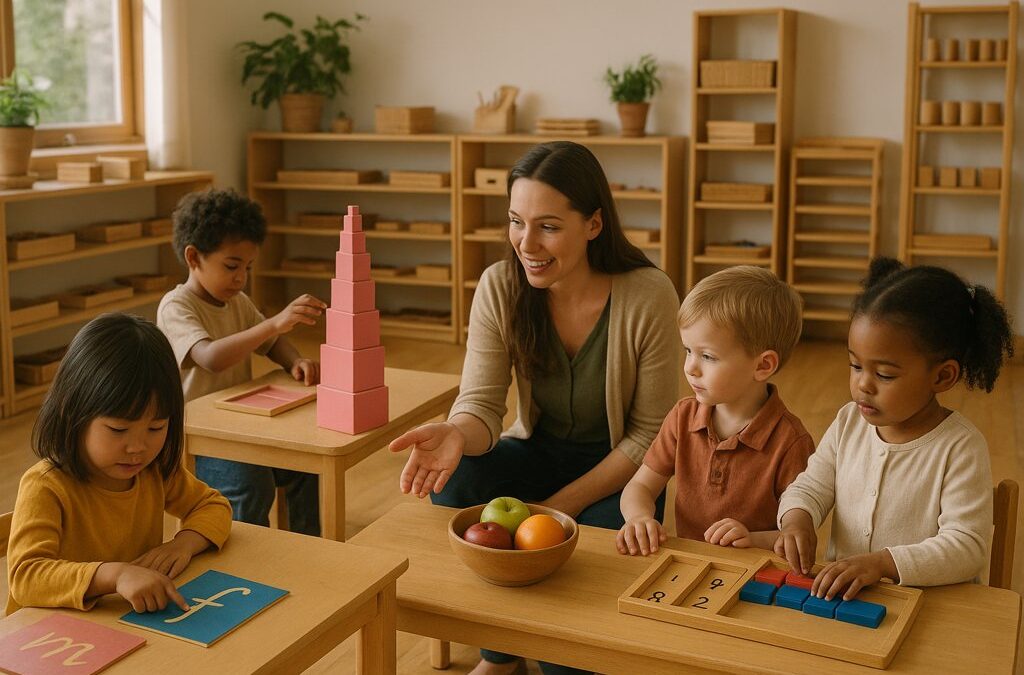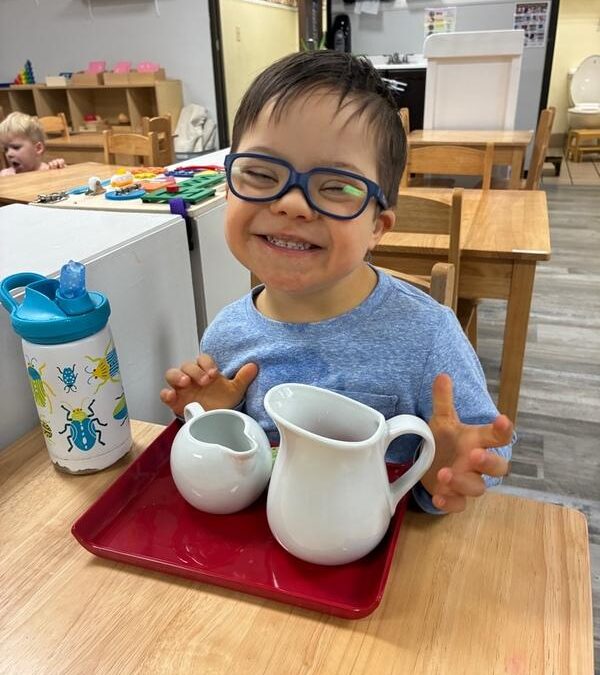
Our language immersion preschool in Ahwatukee is designed for curious little minds who are ready to explore the world through words, culture, and community. We introduce English, Mandarin, and Spanish through play, movement, and conversation—using the Montessori method to help children become confident speakers, listeners, and global citizens. If you’ve been searching for a preschool that values language, culture, and cognitive growth in equal measure, this may be exactly what your child (and your future self) needs.
What Makes a Language Immersion Preschool So Different?
Unlike traditional language instruction—where children sit and repeat vocabulary—language immersion program puts your child inside the language. From greetings to songs, lunch conversations to storytime, children learn as they live: naturally and joyfully.
At Amici Montessori, we take this one step further by grounding immersion in the Montessori philosophy. Children learn languages by touching, doing, moving, and choosing. Whether they’re slicing fruit in Practical Life, pouring water in Sensorial work, or listening to a Mandarin fable, they’re surrounded by meaningful, real-world language use that clicks.
Why Early Language Exposure Isn’t Just “Nice”—It’s Essential
The first six years of life are what experts call the language-sensitive period. During this time, the brain absorbs sounds and structures effortlessly. That’s why children can mimic accents so well—and why it’s so much harder to do later in life.
Early immersion allows children to:
- Speak with native-level pronunciation
- Pick up grammar through context, not correction
- Build confidence in expressing themselves in any language
Think of it like musical ability or swimming—it’s easier, faster, and more natural when started early. Language is no different. By giving your child daily exposure to three languages, you’re giving them tools they’ll use for a lifetime.
How Multilingual Learning Boosts the Brain
Did you know that bilingual and trilingual children often show higher executive function skills? That’s a fancy way of saying they’re better at focusing, switching tasks, and solving problems—because their brains are used to handling more than one system at a time.
Other long-term benefits include:
- Advanced reading and literacy
- Broader vocabulary across all languages
- Greater creativity and cognitive flexibility
- Stronger memory and academic performance
At Amici Montessori, we see this every day. Children become more observant, more thoughtful, and more excited to take on challenges—all because their brains are getting a workout through language immersion.
Raising Global Kids: Language as a Bridge to Culture
We don’t just teach language—we live it. That means children at Amici don’t just learn Mandarin words; they celebrate the Lunar New Year, make paper lanterns, and eat dumplings they helped prepare. They don’t just speak Spanish—they hear it in folk songs, stories about South America, and family heritage days.
This approach teaches children that language isn’t just a skill—it’s a connection to people, history, food, and values. And with that comes:
- Greater empathy and curiosity
- Early understanding of diversity and inclusion
- Confidence in multicultural environments
- A worldview that feels expansive and welcoming
What Immersion Looks Like at Amici Montessori
Our day isn’t broken into “English time” or “Mandarin time.” It flows. Language is naturally integrated into every part of the child’s experience.
Here’s how we do it:
- Native-speaking guides: Trained specialists lead activities in Spanish and Mandarin daily.
- Montessori materials: Language is embedded into hands-on lessons, not flashcards.
- Songs and stories: Each language is taught through rhythm, music, and read-alouds.
- Real-life relevance: Children hear and use language while cooking, gardening, and helping peers.
For parents who don’t speak these languages at home, we also provide tools to support the journey: vocabulary cards, simple songs, and tips to encourage your child’s language development outside the classroom.
A Peek Inside the Day: Language in Motion
| Time | What’s Happening |
|---|---|
| 8:00–9:00 AM | Drop-off & social play (greetings in all 3 languages) |
| 9:00–10:30 AM | Montessori work cycle (Spanish-led Practical Life, Mandarin math) |
| 10:30–11:00 AM | Snack time and cultural song circle |
| 11:00–12:00 PM | Outdoor exploration with trilingual games and storytelling |
| 12:00–1:00 PM | Lunch and conversational immersion with teachers |
| 1:00–2:00 PM | Rest time with multilingual audiobooks or quiet activities |
| 2:00–3:30 PM | Enrichment (arts, music, or science through language-based projects) |
| 3:30–5:00 PM | Free play with language-rich storytelling and social dialogue |
This rhythm creates consistency and comfort—while gently layering in vocabulary.
This rhythm creates consistency and comfort—while gently layering in vocabulary, grammar, and cultural understanding every hour of the day.
Not Sure If It’s Right for You?
You don’t need to be a multilingual family to benefit from immersion. In fact, most of our families only speak English at home.
Still, they choose immersion because they want:
- A rich, culturally aware foundation
- A learning environment that’s joyful, not pressured
- A head start in today’s global world
They see their children becoming more expressive, more adaptable, and more in tune with the world around them—and they know this isn’t just preschool. It’s preparation for life.
Top 5 FAQs – Language Immersion Preschool in Ahwatukee
Do I need to speak another language to help my child at home?
Not at all. We give you all the tools you need, and your child will teach you some new phrases before long!
What if my child gets frustrated?
Our guides are trained to support every learner gently and respectfully. Frustration is rare—and when it happens, we use it as a moment of empowerment, not pressure.
Does it affect their English learning?
Quite the opposite. Children in immersion programs often develop stronger English reading and writing skills over time, due to expanded vocabulary and cognitive growth.
Is this available for toddlers and preschoolers?
Yes. Our immersion begins at 18 months and continues through kindergarten prep, adapting to each stage of development.
Do I need to speak another language to help my child at home?
Not at all. We give you all the tools you need, and your child will teach you some new phrases before long!
What if my child gets frustrated?
Our guides are trained to support every learner gently and respectfully. Frustration is rare—and when it happens, we use it as a moment of empowerment, not pressure.
Does it affect their English learning?
Quite the opposite. Children in immersion programs often develop stronger English reading and writing skills over time, due to expanded vocabulary and cognitive growth.
Is this available for toddlers and preschoolers?
Yes. Our immersion begins at 18 months and continues through kindergarten prep, adapting to each stage of development.
Conclusion
Your child’s world is bigger than ever. At Amici Montessori, we give them the words, confidence, and cultural understanding to grow into it—one joyful day at a time.
If you’re ready to raise a child who not only thinks critically and creatively, but also connects across languages and cultures, language immersion is the first step.
Come see how our Montessori language immersion preschool in Ahwatukee makes that happen—every single day.