As a parent in Phoenix, you want to give your child every possible advantage before they start kindergarten. You’ve probably heard that learning a second language is beneficial — but when should it start, and does it really make a measurable difference?
The answer, backed by decades of neuroscience research, is clear: the earlier, the better. And Spanish immersion preschool is one of the most effective ways to unlock your child’s full potential during the critical window when their brain is naturally wired for language acquisition.
At Amici Trilingual Montessori in Ahwatukee, we see these advantages unfold every day in our classrooms. Here are five research-backed ways Spanish immersion preschool gives your child a lifelong edge.
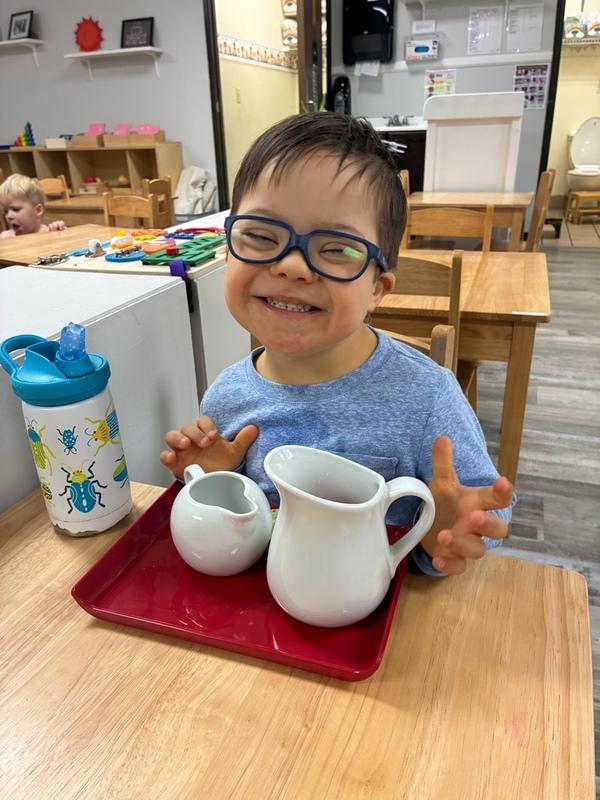
1. Stronger Problem-Solving and Critical Thinking Skills
When young children switch between languages throughout the day, their brains build stronger executive function — the same cognitive skills that control attention, working memory, and flexible thinking.
A landmark study published in Developmental Science found that bilingual children outperform monolingual peers on tasks requiring mental flexibility and problem-solving by age four. In a Spanish immersion preschool, your child practices these cognitive gymnastics naturally during circle time, art projects, snack conversations, and outdoor play.
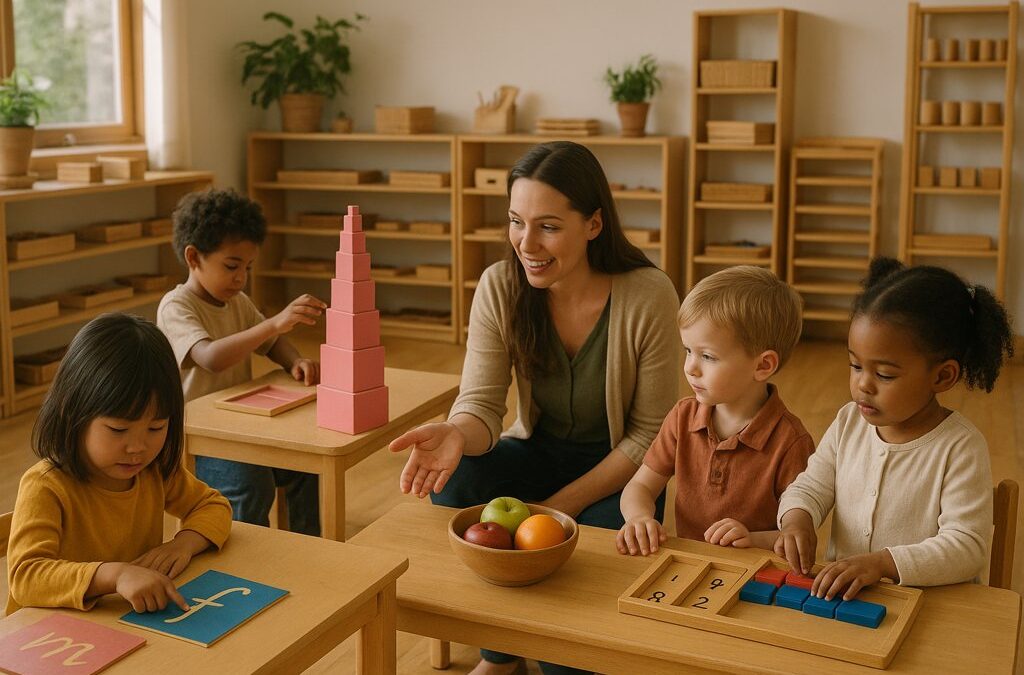
At Amici, our Montessori approach amplifies this effect. Children don’t just hear Spanish — they use it to solve real problems: counting manipulatives, following multi-step instructions for practical life activities, and negotiating with classmates during group work. This combination of immersion education and hands-on Montessori learning creates a powerful cognitive foundation.
2. Enhanced Memory and Academic Readiness
Children in language immersion programs consistently develop stronger working memory than their monolingual peers. This isn’t just useful for language — it translates directly to math, reading comprehension, and science throughout their academic careers.
Research from the University of Washington’s Institute for Learning and Brain Sciences shows that bilingual babies as young as 11 months demonstrate improved cognitive control compared to monolingual infants. By preschool age, this advantage compounds significantly.
For Phoenix parents thinking about kindergarten readiness, this is especially relevant. Children who’ve spent one to two years in Spanish immersion preschool enter kindergarten with stronger attention spans, better memory recall, and more advanced pre-literacy skills — even in English.
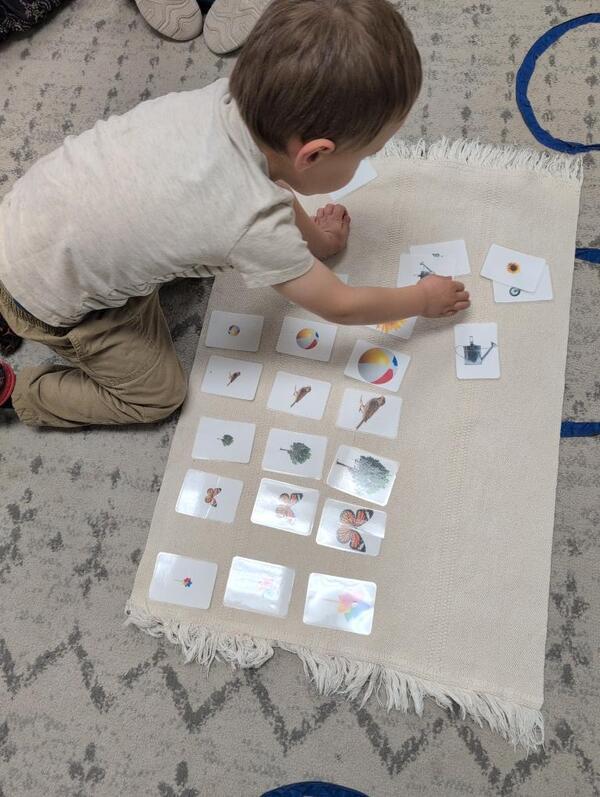
3. Cultural Awareness and Social-Emotional Growth
In a state like Arizona, where over 30% of the population speaks Spanish, raising a bilingual child isn’t just an academic advantage — it’s a life skill. Children in Spanish immersion preschool develop something researchers call “cultural empathy”: the ability to understand and appreciate perspectives different from their own.
Studies from the National Association for the Education of Young Children (NAEYC) show that children exposed to multiple languages and cultures during preschool develop stronger social skills, greater emotional regulation, and deeper friendships with diverse peers.
At Amici Trilingual Montessori, our students don’t just learn Spanish vocabulary — they celebrate Día de los Muertos, cook traditional recipes, sing songs from multiple cultures, and interact daily with native Spanish-speaking teachers. This authentic cultural immersion builds confidence and openness that serves children throughout their lives.
4. A Natural Window That Closes — And Why Preschool Is the Right Time
Neuroscientists call the period from birth to age six the “critical window” for language acquisition. During these years, a child’s brain forms neural connections for language at a rate that will never be matched again. After age seven, learning a second language becomes progressively harder — more like studying a subject in school than absorbing it naturally.
This is why waiting until elementary school or middle school to introduce Spanish puts your child at a significant disadvantage. A child who starts Spanish immersion at age two or three will develop native-like pronunciation, intuitive grammar, and fluid comprehension — advantages that late learners struggle to achieve even after years of formal study.
At Amici, we offer immersion starting from our infant program, giving families the opportunity to start during the most receptive period of brain development. Our toddler and preschool classrooms continue building on this foundation with age-appropriate Montessori materials presented in Spanish, Mandarin, and English.
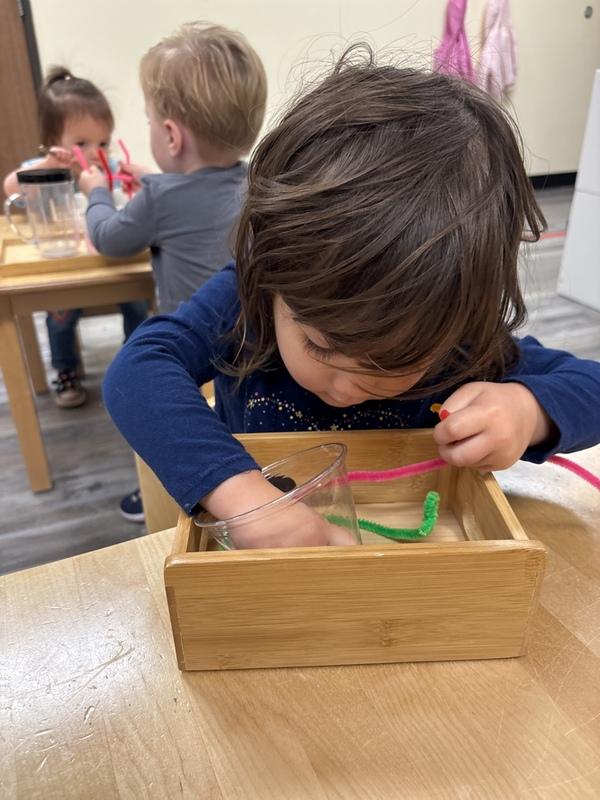
5. Higher Academic Achievement That Lasts Through High School
The benefits of early Spanish immersion don’t fade after preschool — they compound. A comprehensive study by the American Council on the Teaching of Foreign Languages tracked students from immersion programs through high school and found they consistently scored higher on standardized tests in all subjects, including English and math.
Thomas and Collier’s landmark longitudinal study of over 200,000 students found that dual-language immersion students outperformed their peers on state achievement tests by 5th grade and maintained that advantage through graduation. The effect was strongest for students who started immersion in preschool.
For Arizona families considering ESA (Empowerment Scholarship Account) funding for private preschool, this research makes the investment case compelling: early trilingual immersion isn’t just enrichment, it’s a foundation for lifelong academic success.
What Makes Amici’s Approach Different
Not all immersion programs are created equal. At Amici Trilingual Montessori in Ahwatukee, we combine three proven educational approaches:
- Full language immersion — Spanish, Mandarin, and English throughout the day, not just a 30-minute class
- Authentic Montessori method — child-led, hands-on learning with real materials, not worksheets
- Native-speaking teachers — children learn from fluent speakers, developing authentic pronunciation and cultural understanding
This trilingual Montessori approach serves children from infants through 2nd grade, offering a continuous immersion experience that builds year over year.
Ready to See the Difference?
The best way to understand how Spanish immersion preschool works is to see it in action. We invite Ahwatukee and Phoenix-area families to schedule a tour and visit our classrooms. Watch how naturally our students switch between languages, solve problems independently, and show genuine joy in learning.
Amici Trilingual Montessori is located at 1244 E. Chandler Blvd., Phoenix, AZ 85048 — serving families in Ahwatukee, Chandler, Tempe, and the greater Phoenix area.
Frequently Asked Questions
At what age should my child start Spanish immersion preschool?
The ideal time to start is between birth and age three, when the brain is most receptive to language acquisition. However, children up to age six still benefit enormously from immersion education. At Amici Trilingual Montessori, we offer programs starting from infancy through 2nd grade.
Will Spanish immersion confuse my child or delay their English development?
No. Research consistently shows that children in dual-language programs develop English skills at the same rate or faster than monolingual peers. Early bilingualism strengthens overall language processing, and any temporary mixing of languages is a normal, healthy part of bilingual development.
Can I use Arizona ESA funds for Spanish immersion preschool?
Yes. Arizona’s Empowerment Scholarship Account (ESA) program can be used for approved private preschool tuition, including language immersion programs. Amici Trilingual Montessori accepts ESA funding. See our complete Arizona ESA guide for details.
What is the difference between Spanish immersion and a Spanish class?
In a Spanish class, children study the language for 30-60 minutes. In full immersion, Spanish is the medium of instruction throughout the day — children learn math, science, art, and practical life skills in Spanish. This approach mirrors how children naturally acquire their first language, leading to fluency rather than just vocabulary knowledge.