A child development center focuses on basic care, socialization, and age-appropriate activities in a group setting, while a Montessori school follows a specific educational philosophy built on self-directed learning, mixed-age classrooms, and hands-on materials. The difference comes down to structured curriculum versus custodial care — and for Ahwatukee families, that distinction shapes your child’s entire early education experience.
Parents in the Chandler Boulevard corridor, South Mountain, and Ahwatukee Foothills often ask us: “What’s the difference between a daycare and a Montessori school?” It’s a fair question — from the outside, both involve young children in a classroom. But the philosophy, teacher training, classroom design, and outcomes are fundamentally different. At Amici Trilingual Montessori, we believe understanding these differences helps parents make the best choice for their family.
What Is a Child Development Center?
Key Takeaways:
- Child development centers prioritize safe supervision, socialization, and basic school readiness
- Activities are typically teacher-directed and follow a set daily schedule
- Curriculum varies widely — there’s no single standard or certification required
Child development centers — sometimes called daycares, childcare centers, or early learning centers — provide supervised care for children during working hours. Many centers in the Phoenix metro area offer structured activities like circle time, arts and crafts, outdoor play, and basic pre-academic skills like letter recognition and counting.
The quality of a child development center depends largely on the individual facility. Some offer excellent programming with trained educators, while others focus primarily on custodial care. In Arizona, child development centers must meet DHS licensing requirements for safety, ratios, and facility standards, but there’s no required educational philosophy or curriculum framework.
For many families, a child development center serves an important need — reliable, safe care during work hours. But if you’re looking for an educational approach that intentionally develops independence, critical thinking, and a love of learning, it’s worth understanding how Montessori differs.
What Makes Montessori Education Different?
The Montessori method, developed by Dr. Maria Montessori over a century ago, is built on a core belief: children learn best when they can choose their own activities within a carefully prepared environment. This isn’t “free play” — it’s structured freedom, where every material in the classroom has a specific learning purpose and children are guided by trained Montessori educators.
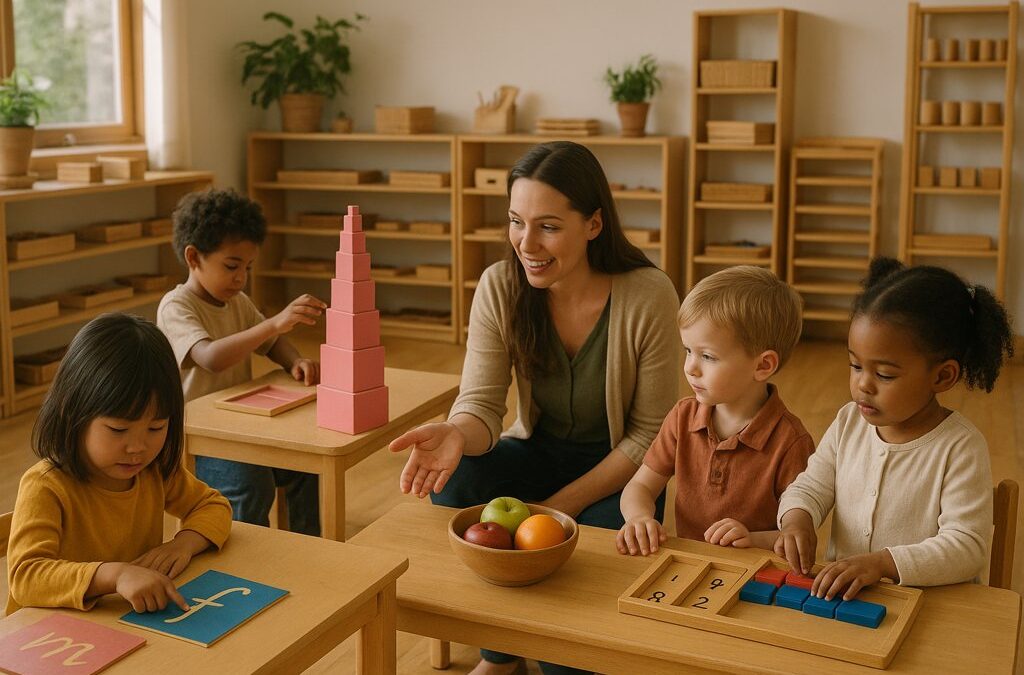
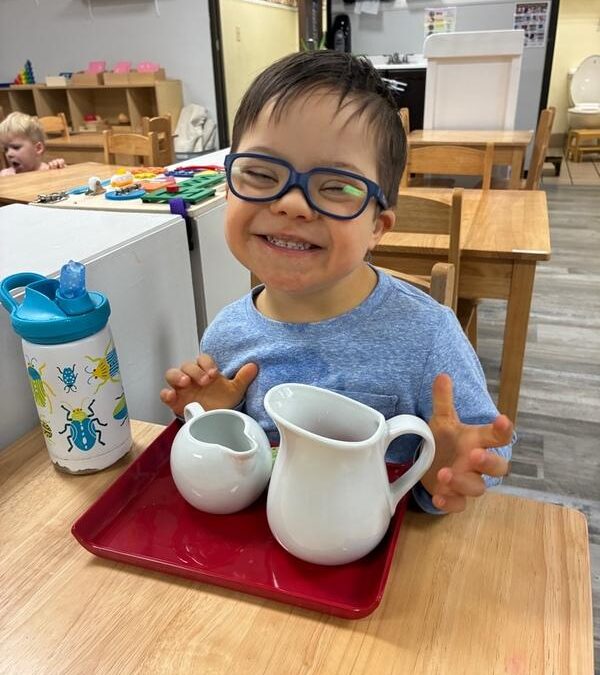
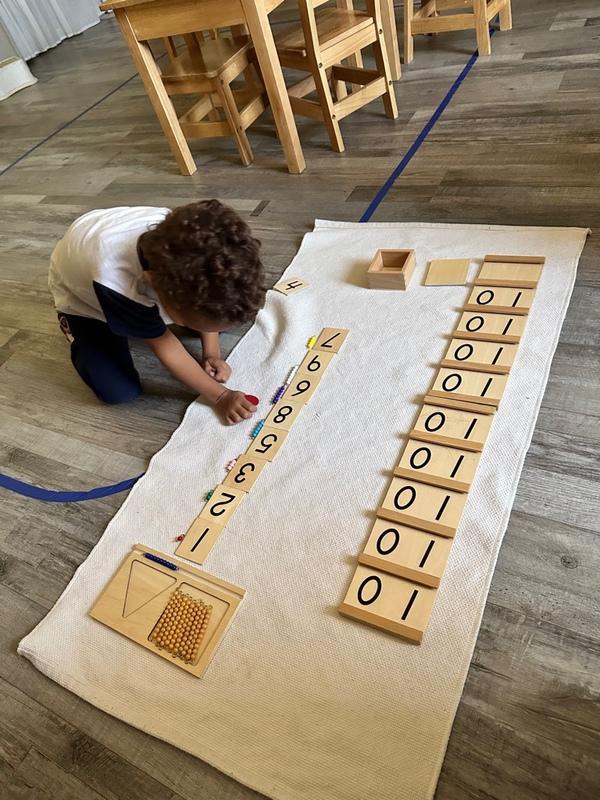
Self-directed learning: In a Montessori classroom, children choose their work from open shelves of materials. A three-year-old might spend 45 minutes focused on pouring water between vessels (developing fine motor skills and concentration) while a five-year-old next to them works with golden beads to understand place value in math. The teacher observes and guides rather than lecturing to the whole group.
Mixed-age classrooms: Montessori groups children in three-year age spans (0-3, 3-6, 6-9). Younger children learn by watching older peers, and older children reinforce their knowledge by teaching. This mirrors real-world social dynamics and builds empathy, leadership, and communication skills that same-age classrooms can’t replicate.
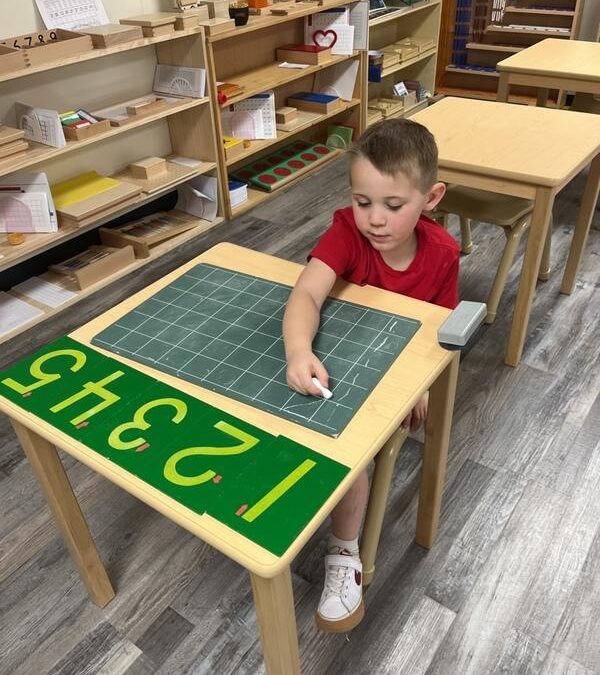
Hands-on materials: Every Montessori material — from the pink tower to the movable alphabet — is designed to teach a specific concept through touch and manipulation. Children don’t learn about fractions from a worksheet; they hold fraction pieces, fit them together, and discover the relationships themselves. This concrete-to-abstract progression builds deep understanding.
Child Development Center vs Montessori: A Side-by-Side Comparison
Here’s how the two approaches compare across the areas that matter most to Ahwatukee and South Phoenix families:
Curriculum approach: Child development centers typically use teacher-directed activities where everyone does the same project at the same time. Montessori allows each child to work at their own pace on self-selected activities, meaning advanced learners aren’t held back and children who need more time aren’t rushed.
Teacher’s role: In a traditional center, the teacher leads the class. In Montessori, the teacher is a guide — observing each child, preparing the environment, and offering lessons when a child is developmentally ready. Montessori teachers hold specialized credentials beyond standard early childhood education degrees.
Classroom environment: Conventional centers often feature bright colors, cartoon decorations, and toy bins. Montessori classrooms are intentionally calm — natural materials, child-sized furniture, open shelves with carefully curated materials. Everything is at the child’s level, promoting independence. Children even learn to prepare their own snacks and clean up after themselves.
Assessment: Most child development centers use periodic progress reports or milestone checklists. Montessori teachers maintain detailed observation records for each child, tracking not just academic progress but social-emotional development, concentration, and independence — providing a much more complete picture of your child’s growth.
Why Amici Trilingual Montessori Goes Beyond Traditional Montessori
At Amici Trilingual Montessori, located at 1244 E Chandler Blvd in Ahwatukee, we combine authentic Montessori education with something no traditional child development center — and very few Montessori schools — can offer: full trilingual immersion in English, Spanish, and Mandarin Chinese.
Our program serves children from 6 weeks old through 2nd grade, meaning families don’t have to switch schools as their child grows. We’re also ESA-eligible (Arizona Empowerment Scholarship Account), which means qualifying families can use state education funds toward tuition — making a premium Montessori education more accessible than many parents realize.
For families in the Ahwatukee Foothills, Chandler, and Tempe border communities, Amici offers what neither a standard child development center nor a traditional English-only Montessori school can: the Montessori method delivered in three languages, with continuity from infancy through elementary school. Come see the difference on a tour.
“L’educazione è un’arma potente che puoi usare per cambiare il mondo.” — Education is the most powerful weapon you can use to change the world.
Frequently Asked Questions
Is Montessori better than daycare?
Montessori and daycare serve different purposes. Daycare (child development centers) focuses on safe care during work hours, while Montessori is a structured educational approach. If your goal is academic preparation, independence, and critical thinking skills, Montessori offers a more intentional framework. Both can provide loving, safe environments.
What is the Montessori method in simple terms?
The Montessori method lets children learn by choosing their own activities from hands-on materials in a prepared classroom. Teachers guide rather than lecture. Children work at their own pace in mixed-age groups, developing independence, concentration, and a genuine love of learning through self-directed exploration.
What does ESA-eligible mean for preschool?
ESA (Empowerment Scholarship Account) is an Arizona program that provides state education funds directly to families. ESA-eligible schools like Amici Trilingual Montessori can accept these funds toward tuition, making private Montessori education affordable for qualifying families. Any Arizona student can apply.
At what age can my child start at Amici?
Amici Trilingual Montessori accepts children from 6 weeks old through 2nd grade. Our infant program provides nurturing care with early language exposure, and children can continue through our toddler, preschool, kindergarten, and elementary programs without switching schools. Schedule a tour to learn more.
See the Montessori Difference in Person
Tour Amici Trilingual Montessori and experience what makes Montessori education special — calm classrooms, engaged children, and learning in three languages.