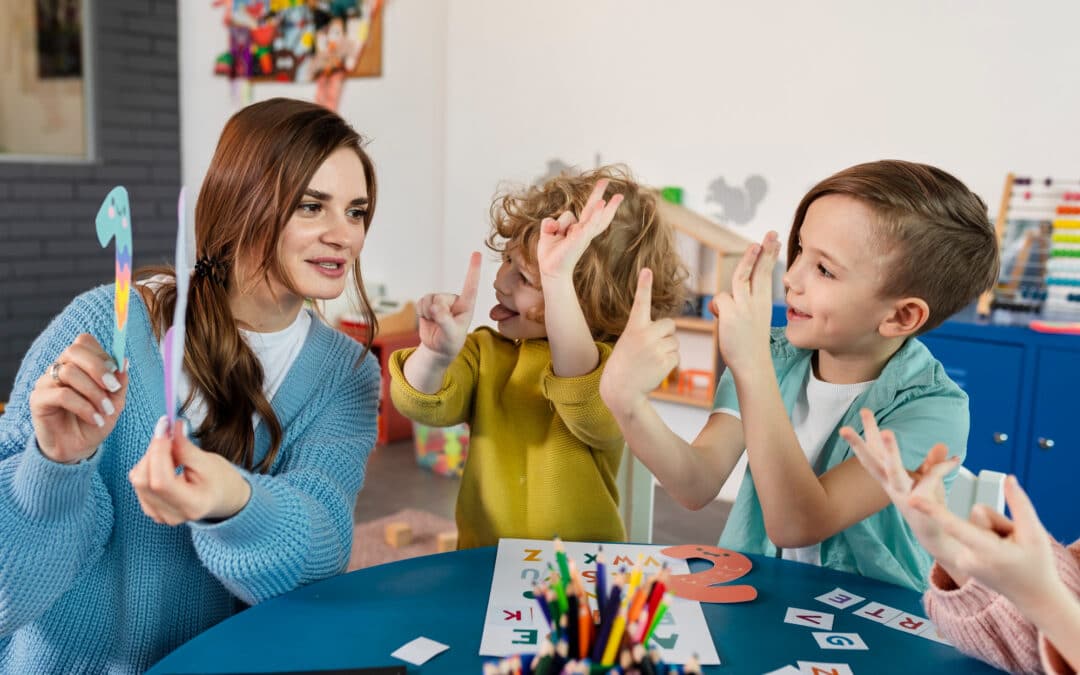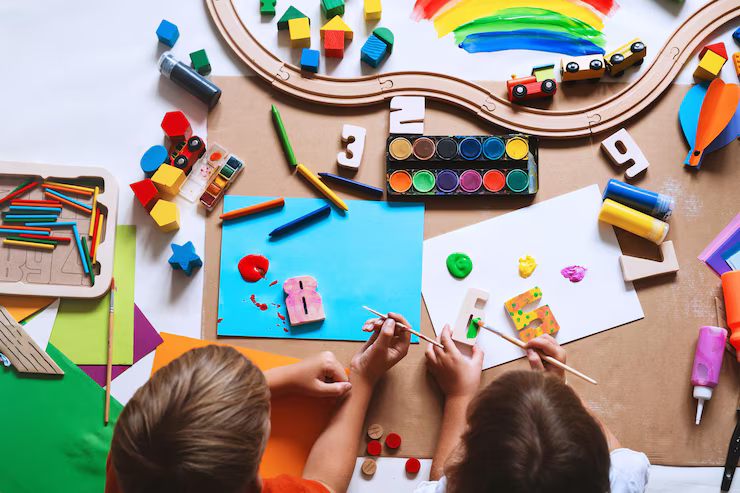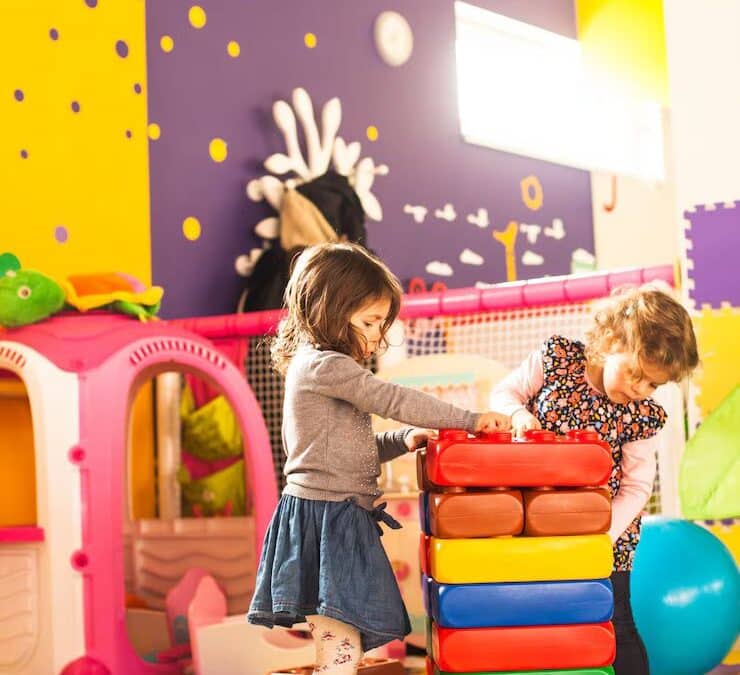
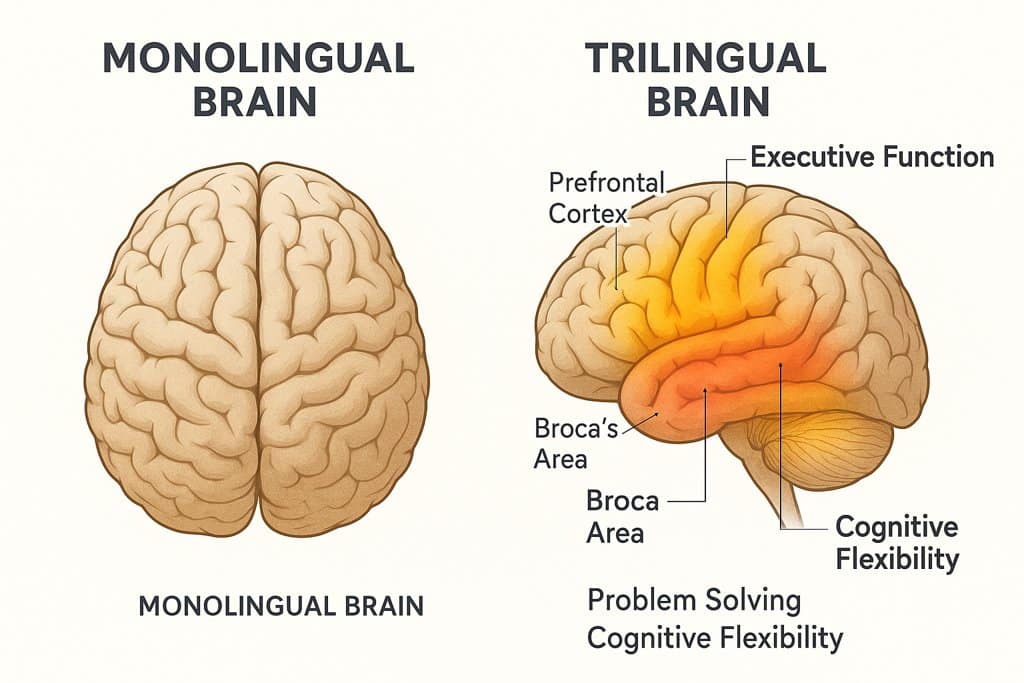
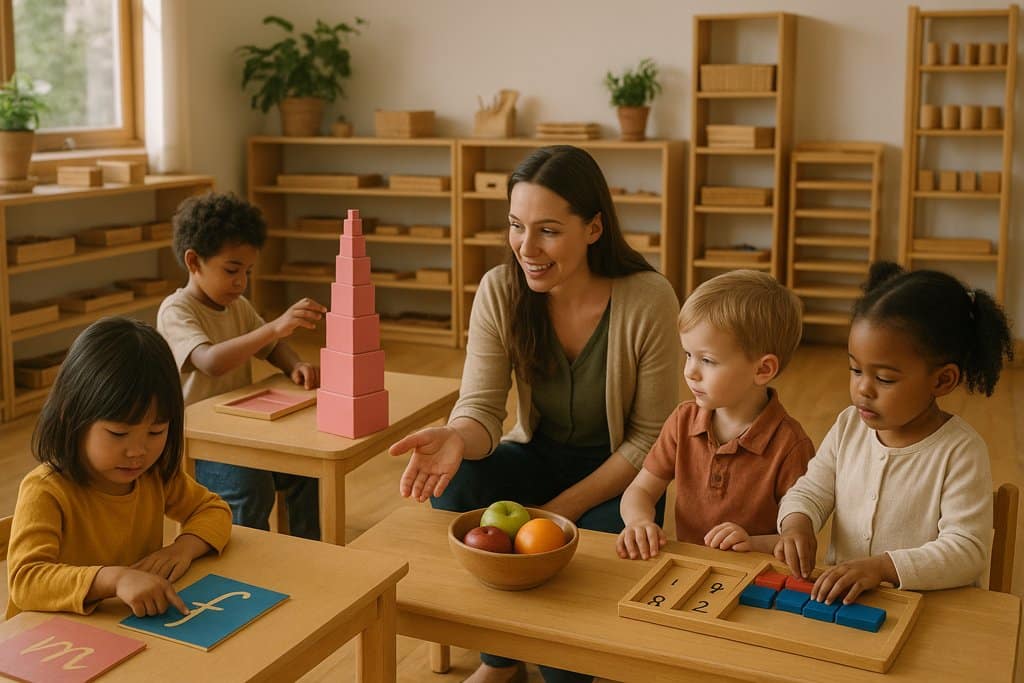
In the quiet corners of a Montessori classroom, something invisible yet profound is happening. As a three-year-old traces a sandpaper letter while her teacher narrates in Mandarin, or a four-year-old washes fruit while counting in Spanish, their brains are performing a feat of biological engineering that will never be possible again in their lifetime.
At Amici Trilingual Montessori, we don’t view early childhood as simply a time for “play.” We view it as the peak of what scientists call the Biological Imperative for language — a narrow window when the human brain is uniquely designed to absorb language naturally, organically, and without effort.
Noam Chomsky and the “Language Acquisition Device”
In the mid-20th century, linguist Noam Chomsky revolutionized our understanding of the human mind by proposing that children are born with a Language Acquisition Device (LAD) — specialized mental circuitry that allows infants to decode the complex rules of grammar and syntax without formal instruction.
This isn’t a metaphor. It’s biology.
While an adult spends years memorizing verb conjugations and drilling vocabulary, a child immersed in Spanish or Mandarin absorbs these structures organically — the same way they learned to walk, to reach, to smile. They aren’t “studying” a language. They are acquiring it through the same natural process they used to learn their mother tongue.
This is why true immersion is fundamentally different from language “classes.” There are no flashcards. No translation drills. No vocabulary lists sent home in a folder. At Amici Trilingual Montessori, the language is the environment. Children hear Mandarin during morning circle. They follow Spanish instructions while preparing a snack. They absorb three languages the way they absorb sunlight — naturally, constantly, without trying.
The Closing Window: The Critical Period Hypothesis
Why is it so much harder to learn a language at thirty than at three?
The answer lies in neuroplasticity. From birth until approximately age seven, the brain exists in a state of hyper-plasticity. During this window, Chomsky’s LAD is operating at maximum efficiency. Neural connections form at an astounding rate — up to one million new synaptic connections per second in the first few years of life.
But as a child approaches seven or eight, a process called synaptic pruning begins. The brain starts to specialize, strengthening the neural pathways used for its primary language and quietly pruning away the circuits it doesn’t need. The ability to effortlessly distinguish the four tones of Mandarin, to roll the Spanish “rr,” to hear the subtle difference between “shi” and “xi” — these capacities fade if they aren’t activated during the critical window.
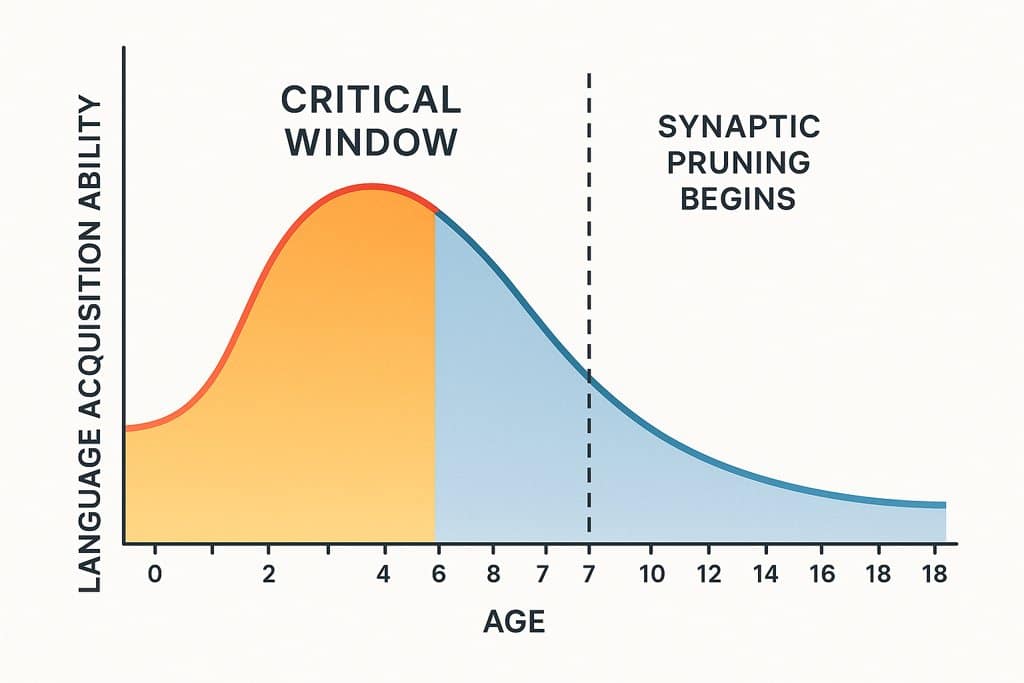
By the time a child reaches middle school — where most traditional programs finally introduce foreign languages — the biological window has largely closed. What was once acquisition (effortless, natural, permanent) becomes learning (labored, academic, fragile).
The research is unambiguous: a study published by MIT confirmed that while grammar-learning ability persists into the late teens, the window for achieving native-like fluency begins closing well before age ten. The earlier a child begins, the deeper the roots grow.
The Power of Natural Immersion
The most common mistake in language education is treating a language like a math problem to be solved — memorize this word, translate that phrase, repeat after me.
At Amici Trilingual Montessori, we reject this entirely.
Natural immersion means the child doesn’t hear a Spanish word and search for the English equivalent. Instead, they associate the word directly with the object, the action, the emotion. When a teacher says “lávate las manos” while guiding a child to the sink, the brain maps sound to meaning through context and experience — no English crutch required.
This is how Maria Montessori described the young child’s Absorbent Mind: a sponge that soaks up everything in its environment without conscious effort. We don’t teach trilingual education — we create an environment where it’s caught, not taught.
When a child learns the word for “apple” in three languages while touching, slicing, and tasting the fruit, the neural connection is forged through direct, multi-sensory experience. This is acquisition at its purest — organic, embodied, permanent.
The Montessori Advantage
Montessori education and language immersion aren’t just compatible — they’re designed for each other.
The Montessori prepared environment provides exactly what the Absorbent Mind needs:
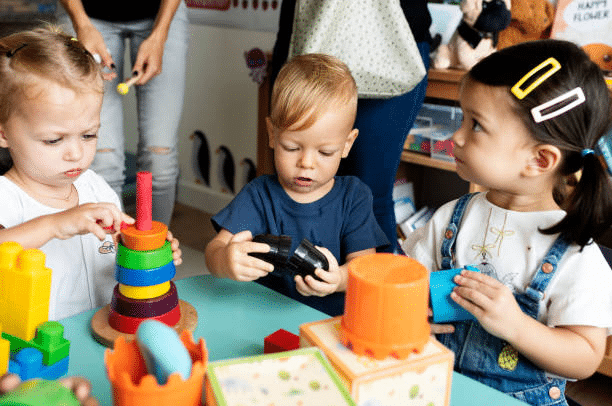
- Sensorial materials that connect abstract language to concrete reality — the Sandpaper Letters, the Pink Tower, the Metal Insets — each one building neural pathways through touch, sight, and sound
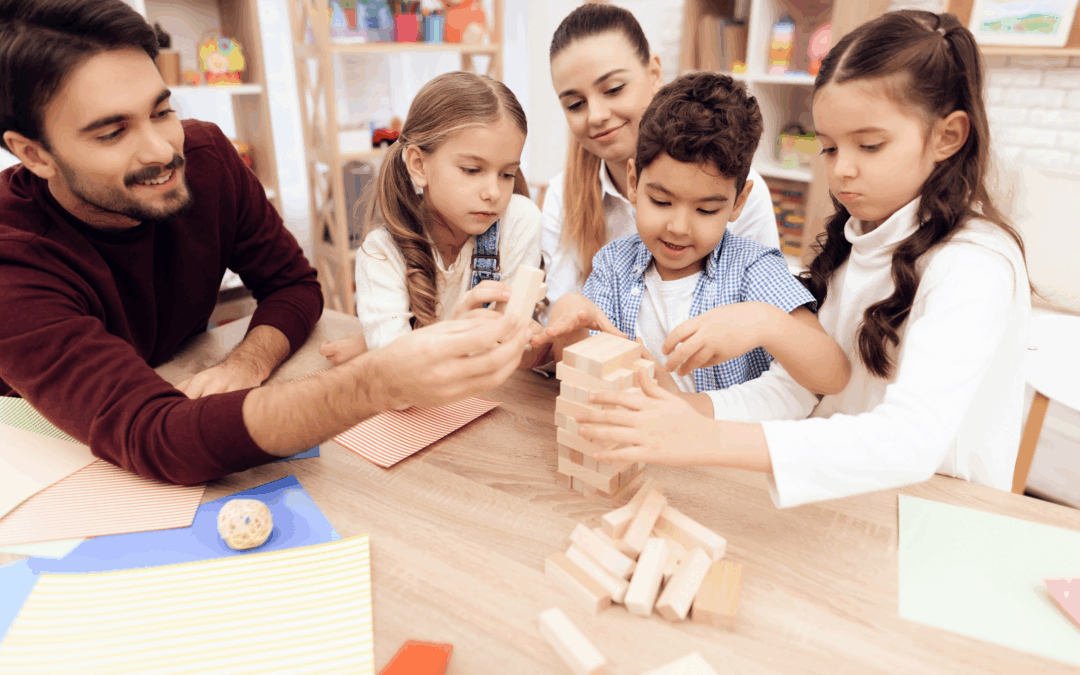
- Mixed-age classrooms where younger children hear older peers speaking fluently, creating a natural “language cascade”
- Uninterrupted work cycles that allow deep concentration — the state where acquisition happens fastest
- Practical life activities (pouring, folding, food preparation) narrated in the target language, connecting vocabulary to real-world action
At Amici Trilingual Montessori, children don’t sit at desks learning “language.” They live it. Every moment — from morning greeting to afternoon dismissal — is conducted in an immersive linguistic environment where Spanish, Mandarin, and English flow as naturally as breathing.
A Bridge to Excellence in Ahwatukee
This trilingual foundation isn’t just about culture — it’s about giving your child an irreversible cognitive advantage during the only years it’s biologically possible.
Our students don’t just “know some words” in Spanish and Mandarin. They enter Kindergarten with a global brain — one that has been shaped by three linguistic systems during the peak of neuroplasticity.
The brain science is clear. The window is open right now. And every day it stays open a little less.
Give Your Child the Trilingual Advantage
The Biological Imperative isn’t something we invented — it’s something we honor. At Amici Trilingual Montessori, we’ve built our entire program around the science of how young children actually acquire language: naturally, organically, through immersion in a carefully prepared Montessori environment.
Don’t let the critical window close before your child has the chance to become a global citizen.
📞 Schedule a Tour of Amici Trilingual Montessori Today — See our immersion classrooms in action.