Quick Answer: Montessori vs. Traditional Preschool
Montessori and traditional preschool can both help young children grow, but they do it in different ways. Traditional preschool usually follows a teacher-led schedule with group lessons and shared activities. Montessori gives children more choice, hands-on work, and uninterrupted time to build independence, focus, and confidence. For Phoenix parents, the right choice depends on how your child learns best and what kind of classroom you want them to experience each day.
If you are comparing Montessori vs traditional preschool, you are probably asking a practical question: which classroom will help my child feel confident, curious, and ready for the next step?
That is the right question. Preschool is not only about letters, numbers, or a cheerful room. It is about the habits your child practices every day: how they choose work, solve problems, listen to adults, interact with peers, care for materials, and begin to see themselves as capable.
For families in Phoenix and Ahwatukee, Montessori and traditional preschool can look similar from the outside. Both may have caring teachers, art, books, music, and play. The difference is in the daily rhythm and the role adults take in guiding the child.
How Daily Routines Differ
Traditional preschool often uses a shared class schedule. Children may move together from circle time to art, snack, story, outside time, and teacher-led activities. This can give children a clear group rhythm. It may work well for children who enjoy following a common plan and participating in whole-class lessons.
Montessori uses a different structure. The heart of the morning is often an uninterrupted work cycle. Children choose from prepared materials, repeat work, receive individual or small-group lessons, and move through the classroom with increasing independence. The teacher observes closely and guides each child toward the next useful challenge.
That does not mean Montessori is unstructured. In a strong Montessori classroom, the structure is built into the environment. Materials have a place. Lessons have a sequence. Children learn how to carry work, return it, respect another child’s concentration, and choose purposeful activity.
The Teacher’s Role in Each Model
In a traditional preschool, the teacher is often the central leader of the group. The teacher introduces activities, gives directions, leads transitions, and keeps the class moving together. The child learns to listen, participate, and follow group expectations.
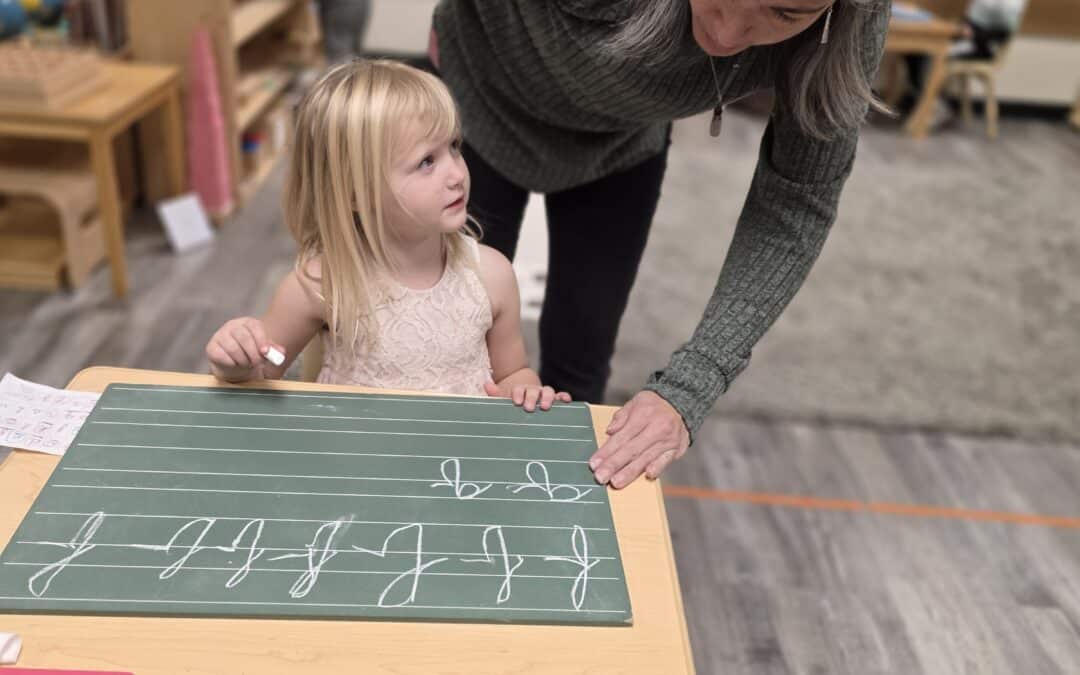
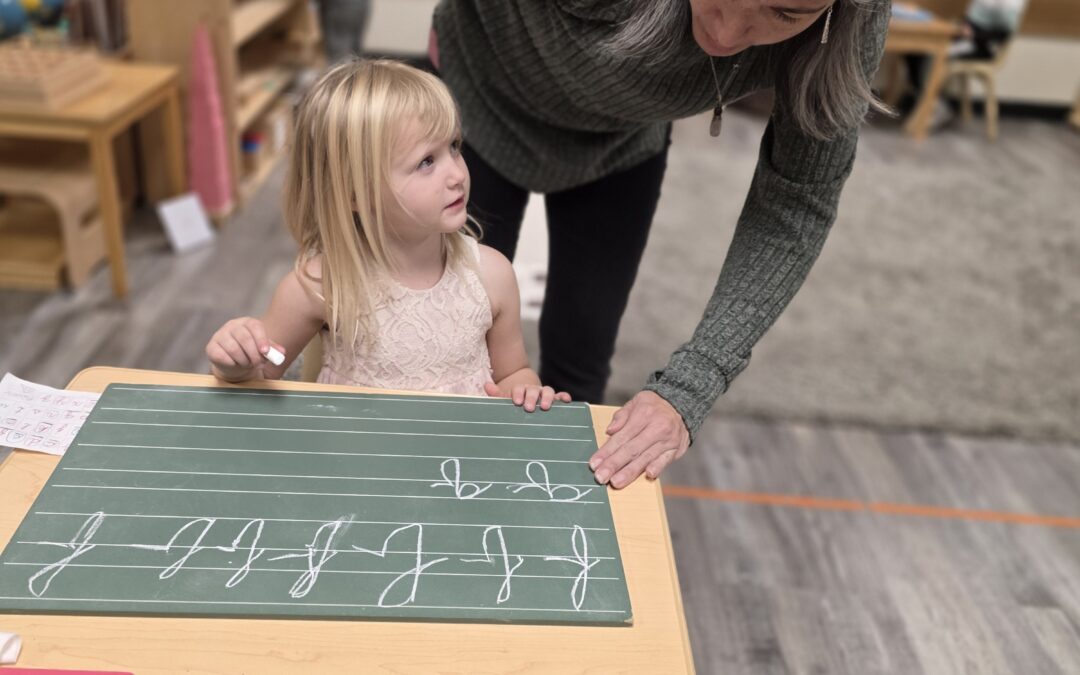
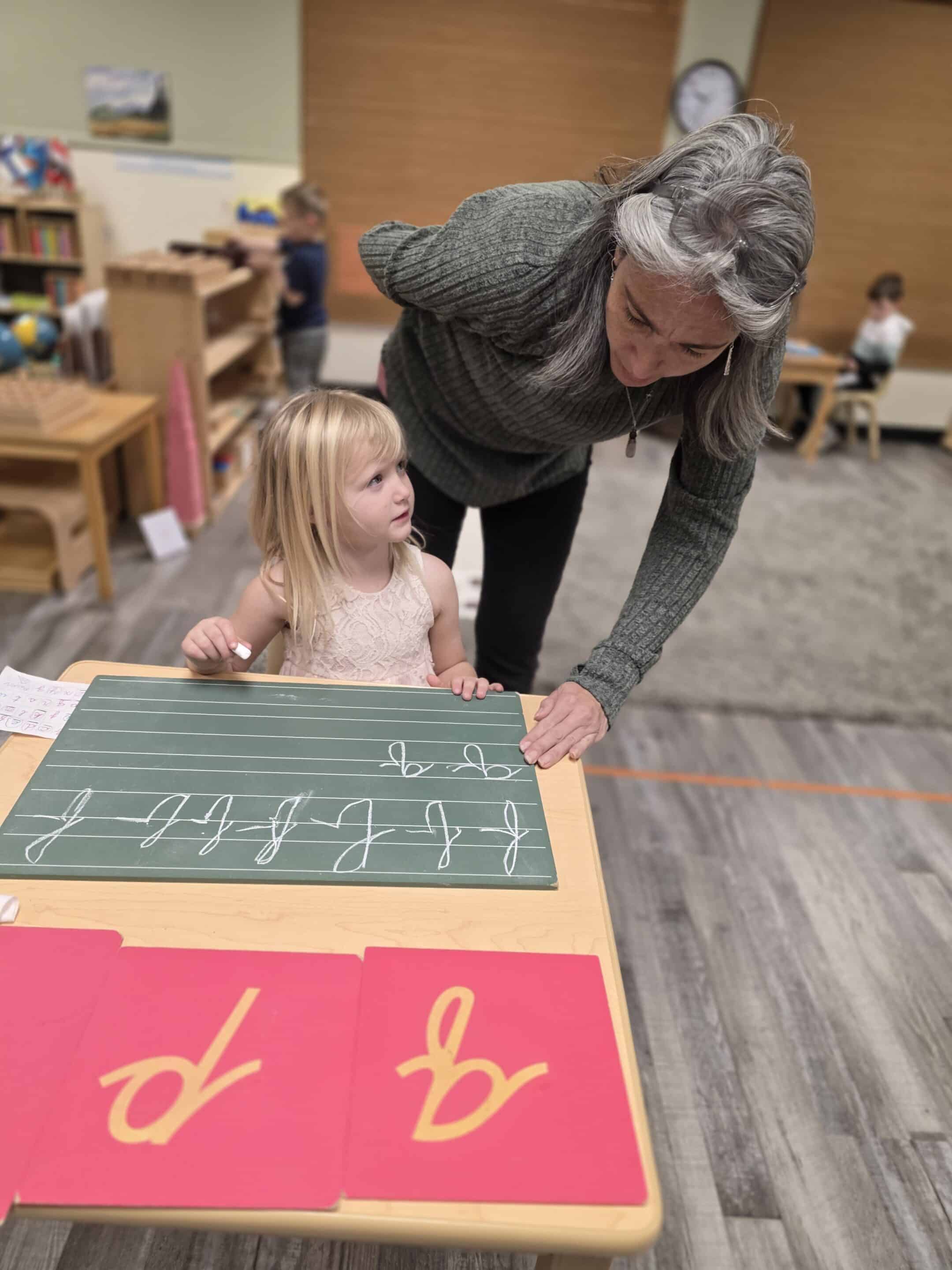
In Montessori, the teacher is more of a guide. The teacher prepares the environment, presents lessons, observes the child’s readiness, and steps in with care. Instead of directing every moment, the teacher watches for concentration, independence, social growth, language, movement, and problem-solving.
This difference matters because children practice different muscles. A teacher-led model can strengthen group participation. Montessori can strengthen initiative, attention, independence, and self-correction. Neither goal is trivial. The question is which daily pattern best matches your child and your family goals.
Hands-On Materials vs. Group Activities
Traditional preschool may use crafts, worksheets, songs, stories, dramatic play, games, and themed activities. These can be joyful and memorable. Many children love the shared energy of a group project or seasonal activity.
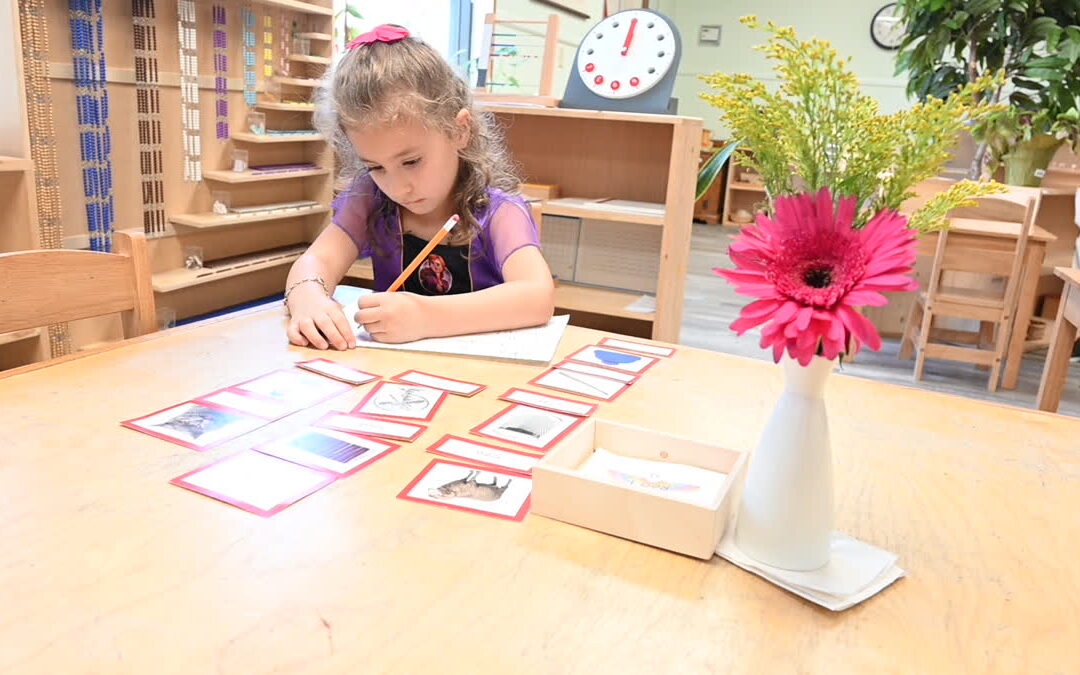
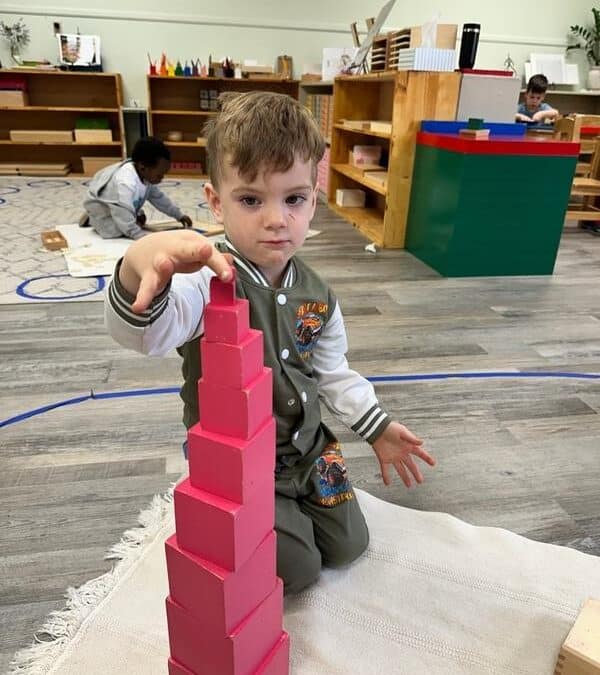
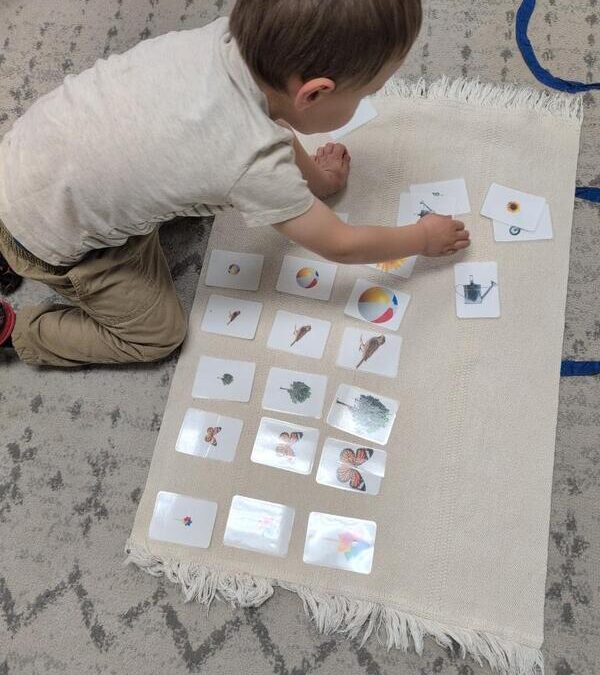
Montessori materials are designed for hands-on discovery. A child may pour water, match sounds, grade objects by size, build words with movable letters, count with beads, polish a surface, or work with sensorial materials that isolate one concept at a time. The materials are not random toys. They are carefully designed to help the child move from concrete experience toward understanding.
One of the gifts of Montessori is repetition. A child can choose the same work many times. Adults may be tempted to hurry them along, but repetition is often where coordination, concentration, order, and confidence are built.
Independence, Focus, and School Readiness
Parents often ask which approach is better for kindergarten readiness. A good answer depends on what you mean by readiness.
If readiness means sitting in a group, following directions, and joining shared activities, a traditional preschool may practice those skills directly. If readiness means independence, focus, problem-solving, care of materials, self-regulation, and confidence with learning, Montessori offers a powerful path.
In Montessori, children practice real responsibility in small ways every day. They choose work, complete a cycle, clean up, wait for a turn, ask for help, and try again when something is difficult. These are not extras. They are the foundation for later academic learning.
At Amici Trilingual Montessori, that foundation is paired with daily exposure to English, Spanish, and Mandarin. Children are not only preparing for the next classroom. They are building comfort in a multilingual world.
Which Children Tend to Thrive in Montessori?
Many different children can thrive in Montessori, but the environment is especially meaningful for children who like hands-on work, need time to concentrate, enjoy doing things independently, or become frustrated when every activity is chosen for them.
Montessori can also support children who are quiet observers. Because the classroom allows individual and small-group work, a child does not always have to perform in front of the whole group. They can watch, practice, and build confidence gradually.
Some children need extra support with choice, transitions, or social boundaries. That does not automatically rule out Montessori. It does mean parents should ask careful questions during a tour. The quality of the teachers matters more than the label on the door.
What Parents Should Look For During a Tour
The best way to compare Montessori and traditional preschool is to visit classrooms. Websites can explain philosophy, but a tour shows the living reality.
During your visit, watch the children first. Are they engaged? Are they respected? Do they know what to do next? Do teachers speak warmly and clearly? Does the room feel calm without feeling rigid?
Ask questions like these:
- How do teachers decide when a child is ready for a new lesson?
- How much uninterrupted work time do children have each day?
- How do you support children who struggle with independence at first?
- How are group lessons, stories, music, and outdoor time balanced with individual work?
- How do teachers communicate progress to parents?
- How does language learning fit into the day?
These questions help you move beyond marketing words. A strong school should be able to explain how its approach shapes an ordinary Tuesday morning.
How Amici Combines Montessori With Trilingual Learning
Amici is not only a Montessori preschool in Ahwatukee. It is a trilingual Montessori community where children experience English, Spanish, and Mandarin as part of daily classroom life.
That combination matters. Montessori gives children a prepared environment, meaningful work, and independence. Trilingual learning adds a broader language foundation through songs, routines, stories, conversation, and relationships with teachers.
For parents comparing options, Amici may be a strong fit if you want your child to develop focus and independence while also hearing and using multiple languages during the years when language learning can feel natural.
Traditional preschool may be the right choice for some families. Montessori may be the right choice for others. The decision should come from seeing your child clearly and visiting the classrooms you are considering.
Ready to Compare in Person?
If you are comparing Montessori and traditional preschool in Phoenix, the best next step is to see the classroom in person. Schedule an Amici tour to watch the work cycle, meet the teachers, and see whether a trilingual Montessori environment feels right for your child.
Frequently Asked Questions
Is Montessori better than traditional preschool?
Montessori is not automatically better for every child, but it can be a strong fit for families who value independence, hands-on learning, concentration, and child-led work within a prepared environment.
What is the main difference between Montessori and traditional preschool?
The main difference is the daily learning model. Traditional preschool is often more teacher-led and group-based. Montessori gives children more independent choice, hands-on materials, and uninterrupted work time.
Is Montessori good for kindergarten readiness?
Yes, Montessori can support kindergarten readiness by building independence, focus, self-regulation, practical skills, early literacy, math thinking, and social confidence.
What kind of child does best in Montessori?
Children who enjoy hands-on learning, repetition, independence, order, and time to concentrate often do well in Montessori. Quiet children and active children can both thrive with skilled guidance.
Can Montessori include language learning?
Yes. At Amici, Montessori is paired with daily exposure to English, Spanish, and Mandarin through routines, songs, stories, classroom work, and teacher conversation.
What should I ask when touring a Montessori preschool?
Ask about the work cycle, teacher training, how children receive lessons, how progress is shared, how independence is supported, and how the school helps new children adjust.